
🌿 The Modern Food Environment & Emotional Health: A Metabolic Perspective on What We Eat
Explore how the modern food environment influences inflammation, blood sugar stability, metabolic health, and mood resilience through evidence-based insights.
By Marjorie DiCarlo, M.D., Ph.D., M.P.H.
🌿 The Food Environment Has Changed — Our Biology Has Not
Over the past several decades, the global food landscape has shifted dramatically. Ultra-processed products rich in refined carbohydrates, added sugars, industrial seed oils, and artificial additives now make up a significant portion of daily caloric intake in many households. While these foods offer convenience and shelf stability, they often lack the fiber density, phytonutrients, and micronutrient complexity found in whole-food dietary patterns.
Human physiology, however, evolved in an environment centered around minimally processed foods. Our metabolic systems — including insulin signaling, inflammatory regulation, and stress-response pathways — did not adapt at the same pace as food manufacturing practices.
Mood regulation is often discussed purely from a psychological perspective, yet it is deeply rooted in biology. Research emerging from nutritional psychiatry research continues to explore how dietary patterns influence inflammatory signaling, hormonal balance, and neural communication pathways.
When metabolic systems become strained, fluctuations in mood stability may follow.
🌿 Inflammatory Burden and Mental Health
Inflammation is an essential biological response designed to protect the body from infection and injury. However, when inflammatory signaling becomes persistent and low-grade, it may influence systems beyond immune defense — including the brain.
Research examining inflammatory burden and mental health suggests that immune messengers such as cytokines may interact with neural communication pathways that regulate mood and cognition.
The relationship between neurotransmitters inflammation pathways helps explain how systemic inflammatory activity may influence serotonin availability, dopamine signaling, and emotional resilience. While inflammation alone does not determine mood outcomes, it can shape the biochemical environment in which emotional regulation occurs.
Clinically, hs-CRP inflammation testing is sometimes used to evaluate low-grade systemic inflammatory activity. High-sensitivity C-reactive protein provides insight into subtle elevations in inflammation when interpreted within appropriate clinical context. For individuals interested in gaining additional insight into their inflammatory profile, laboratory assessment may provide helpful information when discussed with a qualified healthcare professional.
👇 Explore hs-CRP testing options below.
View hs-CRP Testing Options
🌿 Blood Sugar Regulation and Emotional Resilience
The brain depends on a steady supply of glucose to function efficiently. When blood sugar rises rapidly and then falls sharply, the body compensates through the release of stress hormones such as cortisol and adrenaline.
These hormonal shifts may contribute to irritability, fatigue, difficulty concentrating, and mood fluctuations.
Supporting blood sugar regulation and emotional resilience often involves stabilizing dietary patterns. Balanced meals that include lean protein, fiber-rich carbohydrates, and healthy fats slow glucose absorption and reduce glycemic variability.
Over time, consistent glucose stability supports metabolic steadiness and more predictable energy delivery to the brain.
🧪 Hemoglobin A1C Testing and Long-Term Glucose Insight
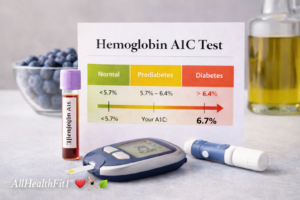
While daily glucose readings provide short-term snapshots, Hemoglobin A1C testing offers a broader perspective on metabolic patterns over approximately 8–12 weeks.
This laboratory marker measures the percentage of glucose attached to hemoglobin, reflecting average blood sugar exposure over time.
Clinically, A1C testing is commonly used to diagnose diabetes, identify prediabetes, and monitor long-term glucose control. It may also provide helpful insight into metabolic patterns that intersect with energy stability and emotional regulation. Tracking trends rather than isolated measurements allows for a more comprehensive understanding of metabolic health.
For individuals interested in gaining additional insight into long-term glucose trends, laboratory evaluation may provide useful information when interpreted in the appropriate clinical context.
👇 Learn more about your long-term glucose profile. Explore Hemoglobin A1C testing options below.
🌿 Metabolic Health and Mood Stability
Metabolic health extends beyond body weight or laboratory numbers. It includes insulin sensitivity, lipid balance, inflammatory tone, vascular health, and mitochondrial efficiency.
Growing research exploring metabolic health and mood suggests that the brain — one of the body’s most metabolically active organs — depends heavily on stable energy delivery.
When metabolic systems function efficiently, neural communication pathways tend to operate more consistently. In many cases, emotional steadiness reflects the broader stability of these underlying physiological systems.
🌿 Hydration and Environmental Exposure
Nutrition includes more than food composition alone. Hydration quality and environmental exposure also contribute to overall metabolic load. Water is essential for circulation, nutrient transport, detoxification pathways, and cognitive clarity. Suboptimal hydration may contribute to fatigue and impaired concentration.
Reducing exposure to potential contaminants may help lower cumulative inflammatory burden. The Clearly Filtered® water pitcher uses Affinity® Filtration Technology — proven to remove up to 365+ contaminants while preserving beneficial minerals. Cleaner hydration supports mineral retention and provides added reassurance regarding water quality.
Learn more here:
👉 Explore Clearly Filtered Water Pitchers and Filters
AllHealthFit1™ Pro Tip ❤️🏃♀️🍃
Metabolic stability supports emotional resilience.
Focus on consistency over restriction. Choose whole foods, balance protein and fiber, hydrate well, and support sleep and stress recovery. Small, sustainable changes build lasting stability.
🌿 Frequently Asked Questions
1. How does the modern food environment affect emotional health?
Highly processed diets may influence inflammation, blood sugar stability, and stress hormones — all of which can impact mood regulation.
2. What is inflammatory burden?
It refers to chronic, low-grade systemic inflammation that may affect immune signaling and brain communication pathways.
3. Why is blood sugar stability important for mood?
The brain depends on steady glucose levels. Rapid spikes and crashes can trigger stress hormones and affect emotional steadiness.
4. When should someone consider A1C or hs-CRP testing?
Testing may be considered when evaluating metabolic health or persistent fatigue and mood variability, under professional guidance.
5. Can improving metabolic health support emotional resilience?
Yes. Balanced nutrition, stable glucose patterns, and reduced inflammatory strain may support more consistent mood regulation.
📚 References
Mayo Clinic – Healthy Diet and Mental Health
National Institutes of Health (NIH) – Inflammation and Brain Function
American Heart Association – Diet and Cardiometabolic Health
🌿 Continue Learning
To explore digestive signaling and mood physiology more deeply, read:
👉 Your Gut and Brain Are Deeply Connected: How Nutrition Influences Mood Stability
https://allhealthfit1.com/?p=8179&preview=true
✨ Stay Connected With Evidence-Based Wellness Insights through the “Healthy You Insider” newsletter — free on Substack 
Through this newsletter, I share research summaries, evidence-based wellness insights, and practical health strategies each week focused on health, nutrition, and fitness.
👇🏼 Subscribe Here
Subscribe to "Healthy You Insider" News letter
⚠️ Medical Disclaimer
Content on AllHealthFit1™ is for educational purposes only and is not medical advice. No physician–patient relationship is created. Always consult a qualified healthcare professional regarding medical concerns. Do not disregard or delay seeking professional care based on information from this site.
In Health & Wellness,
Marjorie DiCarlo, M.D., Ph.D., M.P.H.
AllHealthFit1™ ❤️🏃♀️🍃