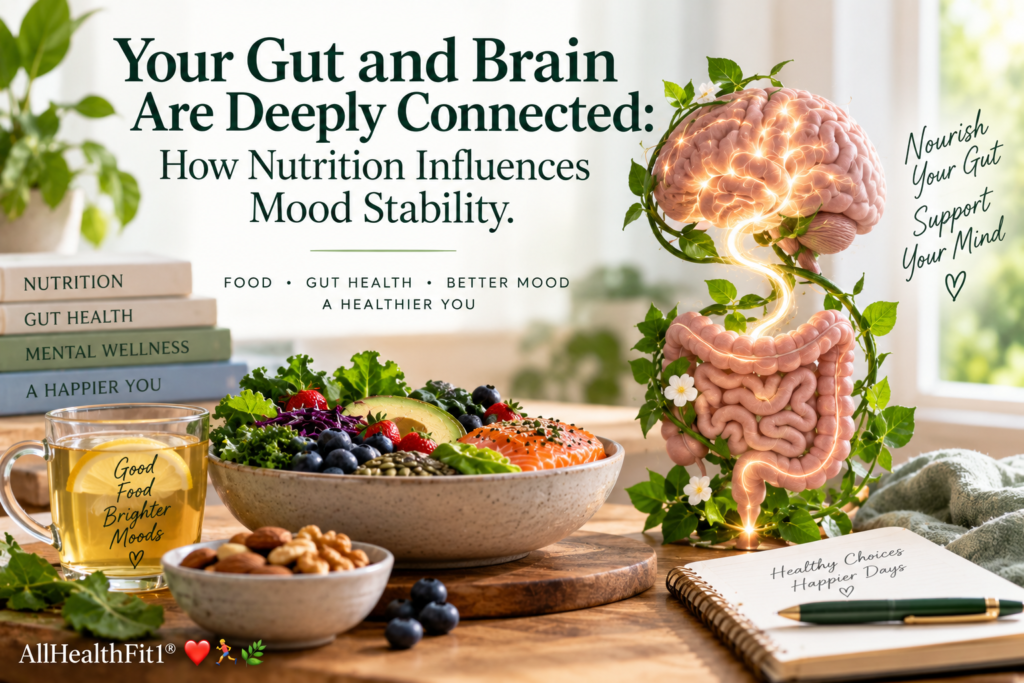

🌿 Over 50? Your Muscles May Hold the Secret to Aging Better Than You Think 🌿
Discover why building muscle after 50 may be one of the most powerful ways to fight age-related weakness, boost metabolism, and maintain strength, mobility, and independence.
By Marjorie DiCarlo, M.D., Ph.D., M.P.H.
Introduction
What if one of the most important secrets to aging well was not found in an expensive supplement, anti-aging treatment, or complicated wellness routine, but in something already within your body?
Your muscles.
Beginning around age 30, adults gradually lose skeletal muscle mass. Research suggests that muscle mass may decline approximately 3%–8% per decade, with losses often accelerating later in life.
By age 50, these changes may begin affecting strength, metabolism, balance, and the ability to perform everyday activities.
But here is the encouraging news: Growing older does not mean individuals must accept becoming weaker.
Scientific research demonstrates that strength training can help preserve muscle mass, improve physical function, support metabolic health, and maintain independence well into later adulthood.
Throughout my years in healthcare and public health education, I have emphasized the importance of preventive health strategies that support long-term wellness and independence.
Maintaining muscle strength is one of those strategies.
Understanding how muscles change with age—and what individuals can do to protect them—may be an important step toward healthier aging.
What Happens to Your Muscles After Age 50?
 Skeletal muscles do much more than allow individuals to walk, lift objects, and move throughout the day.
They play important roles in blood glucose regulation, energy metabolism, joint stability, posture, and physical independence.
However, aging brings physiological changes that can influence muscle health.
These include:
- Gradual decreases in muscle mass
- Changes in muscle fiber size and composition
- Reduced neuromuscular efficiency
- Lower levels of physical activity
- Changes in hormonal regulation
- Reduced responsiveness to dietary protein
Together, these changes may contribute to progressive muscle weakness.
One important condition associated with aging is known as sarcopenia.
Understanding Sarcopenia: The Silent Loss of Muscle
Sarcopenia is a progressive skeletal muscle disorder characterized by reduced muscle strength, often accompanied by decreased muscle quantity or quality.
It becomes more common with advancing age and may develop gradually without obvious early symptoms.
Warning signs can include:
- Difficulty rising from a chair
- Reduced walking speed
- Trouble climbing stairs
- Difficulty carrying groceries
- Decreased grip strength
- Increased fatigue during physical activities
- Problems with balance or mobility
Although sarcopenia is associated with aging, it is not inevitable.
Regular resistance training, adequate nutrition, and appropriate management of chronic health conditions can help preserve muscle function.
Why Muscle Strength May Be One of the Keys to Healthy Aging
Muscle strength influences several physiological systems that become increasingly important with age.
Muscle Strength and Physical Independence
 Maintaining independence requires sufficient strength to perform everyday activities.
Standing from a seated position, carrying laundry, walking upstairs, and lifting household objects all depend on coordinated muscular activity.
As muscle strength declines, these activities may become more difficult.
Resistance training helps strengthen the muscles responsible for functional movements.
Improved strength can support mobility, physical confidence, and the ability to continue participating in meaningful daily activities.
Muscle Health and Blood Sugar Regulation
Skeletal muscle is one of the body’s largest sites for glucose uptake and storage.
During exercise, contracting muscles increase their ability to use glucose for energy.
Regular resistance training can also improve insulin sensitivity.
These adaptations may support healthier blood glucose regulation, particularly among individuals with insulin resistance or type 2 diabetes.
However, strength training should complement—not replace—prescribed diabetes treatment.
Muscle Strength and Bone Health
Muscles and bones work together to support movement and skeletal stability.
Resistance exercises place mechanical stress on bones, encouraging adaptations that help maintain bone strength.
Appropriately designed resistance-training programs may help preserve bone mineral density.
This becomes especially important after menopause and during older adulthood, when osteoporosis risk increases.
Individuals with osteoporosis, previous fractures, or significant joint disorders should seek professional guidance before beginning challenging resistance exercises.
Muscle Strength, Balance, and Fall Prevention
Falls represent a significant health concern among older adults.
Muscle weakness, impaired balance, medications, and certain medical conditions can increase fall risk.
Strength training improves lower-body function and may contribute to better stability.
However, exercise programs combining strength training with specific balance activities are generally more effective for reducing falls than resistance training alone.
Can You Really Build Muscle After 50?
Absolutely.
One of the most encouraging discoveries in exercise science is that skeletal muscle retains the ability to respond to resistance training throughout much of adulthood.
Research involving individuals in their 60s, 70s, and even 80s has demonstrated improvements in muscular strength following appropriately structured exercise programs.
When muscles encounter challenging resistance, they respond through physiological adaptations involving muscle protein synthesis and neuromuscular improvements.
Over time, these changes may increase strength and muscle size.
This process involves a principle known as progressive overload.
Progressive overload means gradually increasing the demands placed on muscles as physical abilities improve.
For example, an individual may begin with light resistance bands and later progress to stronger bands or dumbbells.
The goal is not to lift the heaviest possible weight.
It is to provide consistent, manageable resistance that encourages muscular adaptation without unnecessary injury risk.
How Much Strength Training Do Adults Over 50 Need?
The Centers for Disease Control and Prevention recommends muscle-strengthening activities involving all major muscle groups on at least two days each week.
Older adults should also incorporate aerobic activity and exercises that improve balance.
A beginner-friendly routine may include:

- Chair Squats: Strengthen the thighs, hips, and gluteal muscles while supporting functional mobility.
- Wall Push-Ups: Improve upper-body strength using manageable resistance.
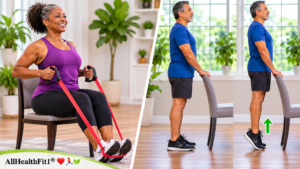
- Resistance-Band Rows: Strengthen the back and supporting shoulder muscles.
- Standing Calf Raises: Support lower-leg strength and stability.
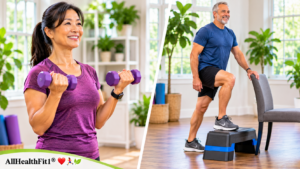
- Light Dumbbell Curls: Improve arm strength for everyday lifting activities.
- Supported Step-Ups: Strengthen the legs while practicing functional movement.
Beginners may start with one set of 8–12 controlled repetitions, depending on physical ability and comfort.
As strength improves, resistance or additional sets may gradually be introduced.
Proper technique, adequate recovery, and consistency are more important than lifting heavy weights immediately.
Individuals with cardiovascular disease, significant balance difficulties, recent injuries, or other medical limitations may benefit from individualized professional guidance.
💪 AllHealthFit1® Recommended Product: Build Strength at Home
Strength training does not necessarily require expensive gym memberships or bulky equipment.
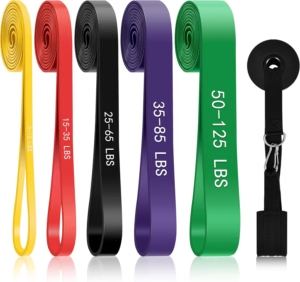
Resistance bands provide a convenient way to introduce muscular resistance at home.
The Fit Simplify Resistance Loop Exercise Bands offer multiple resistance levels, allowing individuals to select resistance appropriate for particular exercises.
Potential benefits include:
- Lightweight, portable exercise equipment
- Multiple resistance levels
- Convenient storage
- Opportunities for progressive resistance exercises
- Use in selected lower-body strengthening routines
Resistance bands can be especially useful for individuals beginning home-based fitness programs.
However, proper positioning and exercise technique remain essential.
MorphoScan Lite Body Composition Scale on Amazon
The Role of Protein in Maintaining Muscle After 50
Strength training provides the stimulus for muscular adaptation, but adequate nutrition supports muscle repair and maintenance.
Protein supplies essential amino acids needed for muscle protein synthesis.
As individuals age, skeletal muscles may become less responsive to smaller amounts of dietary protein.
This phenomenon is sometimes called anabolic resistance.
For many healthy older adults, research supports considering approximately 1.0–1.2 grams of protein per kilogram of body weight daily.
For example, an adult weighing 150 pounds may require approximately 68–82 grams of protein daily, depending on activity level and individual health needs.
Protein-rich foods include:
- Fish and poultry
- Eggs
- Greek yogurt
- Lean meats
- Beans and lentils
- Tofu and soy products
- Cottage cheese
- Nuts and seeds
Distributing protein across meals may help individuals achieve adequate daily intake.
However, individuals with chronic kidney disease or other conditions requiring dietary modifications should consult their healthcare professionals before substantially increasing protein consumption.
🩺 AllHealthFit1® Recommended Product: Monitor Your Body Composition
Maintaining muscle health involves more than monitoring body weight.
Two individuals may weigh the same amount but have different proportions of muscle and body fat.
A body composition smart scale can provide estimated measurements that may help individuals monitor general trends during a fitness program.
Depending on the specific model, measurements may include:
- Body weight
- Estimated body fat percentage
- Estimated muscle-related measurements
- Body mass index
- Other body composition indicators
Tracking general trends may encourage individuals to focus on long-term fitness habits rather than daily weight fluctuations.
However, consumer body composition scales use indirect measurement methods and cannot diagnose sarcopenia or precisely measure muscle mass.
Hydration and measurement conditions may also influence results.

🛒 MorphoScan Lite Body Composition Scale on Amazon
Five Common Mistakes That Can Undermine Muscle Health After 50
Avoiding Strength Training Because of Age
Some individuals mistakenly believe resistance training is only appropriate for younger adults.
However, age alone does not prevent improvements in strength.
Exercise programs should be adapted to individual physical abilities.
Focusing Only on Walking
Walking provides important cardiovascular and mobility benefits.
However, walking alone may not provide sufficient resistance to strengthen every major muscle group.
Combining walking with resistance training offers broader physical benefits.
Not Eating Enough Protein
Insufficient dietary protein may limit the body’s ability to maintain and repair muscle tissue.
A balanced eating pattern containing adequate protein supports muscular health.
Increasing Resistance Too Quickly
Attempting heavy weights before developing proper technique may increase injury risk.
Gradual progression allows muscles, tendons, and joints to adapt.
Ignoring Recovery and Sleep
Muscle adaptation requires sufficient recovery following exercise.
Poor sleep, inadequate nutrition, and excessive training without recovery may interfere with progress.
Prevention and Long-Term Muscle Health
Protecting muscle health requires consistent habits rather than occasional intense exercise.
Important strategies include:
- Perform resistance training at least twice weekly.
- Incorporate balance and cardiovascular exercises.
- Consume adequate dietary protein.
- Maintain sufficient overall calorie intake.
- Increase resistance gradually.
- Stay appropriately hydrated.
- Prioritize sleep and recovery.
- Avoid prolonged physical inactivity.
- Seek evaluation for persistent or unexplained muscle weakness.
- Maintain appropriate preventive healthcare.
Strength training should be viewed as a long-term investment in physical function.
The objective is not necessarily to develop visibly large muscles.
It is to preserve the strength required to remain active, mobile, and independent.
Even modest improvements can make everyday activities easier and support better quality of life.
🌿 AllHealthFit1® Pro Tip
Your muscles are an investment in your future independence. Begin with manageable resistance exercises at least twice weekly, gradually increase the challenge, and support your efforts with adequate protein and recovery. Consistency matters more than intensity when establishing a sustainable routine.
Remember, the goal is not simply to add years to life, but to maintain the strength and mobility needed to enjoy those years.
Frequently Asked Questions (FAQs)
1. Is 50 too old to begin strength training?
No. Adults can improve muscular strength well beyond age 50. Beginners should select exercises appropriate for their physical abilities and gradually increase resistance.
2. Can strength training reverse age-related muscle loss?
Resistance training can improve muscle strength and increase muscle mass, helping counteract age-related declines. However, it does not completely reverse biological aging.
3. Is walking enough to prevent muscle loss?
Walking supports cardiovascular health and mobility but generally does not provide sufficient resistance for all major muscle groups. Combining walking with strength training provides broader benefits.
4. How long does it take to build muscle after 50?
Some improvements in strength may become noticeable within several weeks. Measurable increases in muscle size generally require consistent training over several months.
5. Do I need a gym membership to build muscle?
No. Resistance bands, dumbbells, body-weight exercises, and appropriately designed home workouts can improve muscular strength.
🌿 Beyond the Article: More Health Insights Worth Exploring
Continue your journey toward healthier aging with these related AllHealthFit1® articles:
Protein After 50: Why Your Body Needs More Than You Think
Is Your Diet Fueling Inflammation? The Foods That Fight Back
Explore more evidence-based health and wellness articles at AllHealthFit1.com.
🌿 Join Our “Healthy You Insider” Community!
Get weekly evidence-based health, nutrition, and fitness insights delivered straight to your inbox through our “Healthy You Insider” newsletter.
References
- Centers for Disease Control and Prevention. Adult Activity: An Overview. CDC Physical Activity Guidelines.
- Centers for Disease Control and Prevention. Older Adult Activity: An Overview. CDC Older Adult Recommendations.
- Cruz-Jentoft AJ, Bahat G, Bauer J, et al. Sarcopenia: Revised European consensus on definition and diagnosis. Age and Ageing. 2019;48(1):16–31. https://doi.org/10.1093/ageing/afy169.
- Bauer J, Biolo G, Cederholm T, et al. Evidence-based recommendations for optimal dietary protein intake in older people: A position paper from the PROT-AGE Study Group. Journal of the American Medical Directors Association. 2013;14(8):542–559. https://doi.org/10.1016/j.jamda.2013.05.021.
Affiliate Disclosure
As an Amazon Associate, AllHealthFit1® earns from qualifying purchases. AllHealthFit1® also participates in other affiliate marketing programs with select health, wellness, and lifestyle partners. This article may contain affiliate links, and if you choose to make a purchase through these links, I may earn a small commission at no additional cost to you. Your support helps sustain the development of evidence-based health education and wellness resources through AllHealthFit1®.
⚕️ Medical Disclaimer
Content on AllHealthFit1® is provided for educational and informational purposes only and is not intended as medical advice. Always consult a qualified healthcare professional regarding medical concerns, symptoms, screening, laboratory testing, diagnosis, or treatment decisions.
In Health & Wellness,
Marjorie DiCarlo, M.D., Ph.D., M.P.H.
AllHealthFit1® ❤️🏃♀️🍃