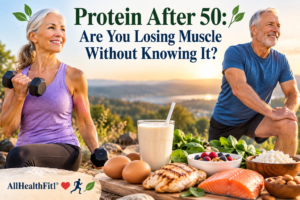
🌿 Muscle Loss After 50: Are You Getting Enough Protein? 🌿
An evidence-based overview of how aging affects muscle strength, why adequate protein matters after age 50, and how nutrition, physical activity, and preventive healthcare may help you maintain mobility and independence.
By Marjorie DiCarlo, M.D., Ph.D., M.P.H.
🌿 Introduction
Have you noticed that climbing stairs seems more challenging than it once did? Perhaps carrying groceries feels heavier, or you become tired more quickly during activities that previously required little effort.
While these changes may seem like an inevitable part of aging, they could also indicate gradual muscle loss.
As you grow older, your body undergoes physiological changes that can affect muscle strength, metabolism, balance, and physical performance. One important factor that is sometimes overlooked is whether you are consuming enough protein to maintain healthy muscle tissue.
Throughout my years working in healthcare, I have come to appreciate how important maintaining strength and mobility is to overall health and independence. Muscle health is not simply about physical appearance. It influences your ability to remain active, perform everyday tasks, and maintain your quality of life.
According to the National Institute on Aging, maintaining muscle strength and participating in regular physical activity are important components of healthy aging.
The encouraging news is that muscle loss is not entirely unavoidable. With appropriate nutrition, resistance exercise, and consistent healthy habits, you may be able to preserve muscle strength well into your later years.
🌿 Understanding Muscle Loss After 50
Your skeletal muscles are responsible for much more than movement. They help maintain posture, support balance, regulate glucose metabolism, and contribute to overall physical function.
As you age, your body may become less efficient at repairing and building muscle tissue.
Researchers describe one contributing factor as anabolic resistance, which occurs when aging muscles respond less effectively to dietary protein and exercise.
According to research published in Age and Ageing, changes in muscle strength and muscle quality are important characteristics of age-related muscle deterioration.
In my view, one of the most important messages for adults over 50 is that maintaining muscle health deserves the same attention as cardiovascular health, blood pressure, and cholesterol management.
Common Signs of Age-Related Muscle Loss
- Difficulty rising from a seated position
- Reduced muscle strength
- Slower walking speed
- Difficulty climbing stairs
- Reduced physical endurance
- Changes in balance or stability
- Unintentional loss of muscle mass
If you experience persistent weakness, unexplained weight loss, or noticeable changes in mobility, I encourage you to discuss these symptoms with your healthcare professional.
🌿 Sarcopenia: Why Muscle Preservation Matters
Age-related muscle loss can progress into a condition known as sarcopenia.
Sarcopenia is a skeletal muscle disorder characterized primarily by reduced muscle strength, often accompanied by decreased muscle quantity or quality.
According to the European Working Group on Sarcopenia in Older People, reduced muscle strength is an important indicator of possible sarcopenia.
This condition may increase your risk of falls, physical disability, reduced mobility, and loss of independence.
Several factors may contribute to sarcopenia, including inadequate nutrition, prolonged inactivity, chronic disease, and aging-related physiological changes.
During my healthcare career, I have recognized the importance of helping individuals understand how maintaining physical function can influence their long-term well-being.
Although aging cannot be prevented, many contributing factors associated with muscle deterioration can be addressed.
🌿 How Much Protein Do You Really Need After 50?
 Protein is essential for building and repairing muscles, maintaining healthy tissues, and supporting numerous metabolic processes.
However, the amount you need depends on your age, weight, activity level, and medical history.
The standard Recommended Dietary Allowance for adults is approximately 0.8 grams of protein per kilogram of body weight daily.
According to the PROT-AGE Study Group, many healthy older adults may benefit from approximately 1.0–1.2 grams per kilogram of body weight daily to support muscle maintenance.
These higher recommendations are particularly relevant to older adults, although they are not automatically necessary for everyone beginning at age 50.
Estimated Daily Protein Needs
| Body Weight | Standard RDA | Older Adult Target |
|---|---|---|
| 120 pounds | 44 g | 54–65 g |
| 150 pounds | 54 g | 68–82 g |
| 175 pounds | 64 g | 79–95 g |
| 200 pounds | 73 g | 91–109 g |
For example, if you weigh approximately 150 pounds, an older-adult protein target may range from 68 to 82 grams daily.
I recommend viewing these numbers as educational starting points rather than individualized prescriptions.
If you have chronic kidney disease or another medical condition requiring dietary modifications, consult your healthcare professional before significantly increasing protein consumption.
🌿 Why Protein Quality Matters
Not all dietary proteins have the same amino acid composition.
Your body requires nine essential amino acids that must be obtained through food.
One amino acid, leucine, plays an important role in stimulating muscle protein synthesis.
According to the National Institutes of Health Office of Dietary Supplements, high-quality dietary protein provides essential amino acids necessary for muscle repair and maintenance.
Protein-Rich Foods to Consider

- Eggs
- Chicken and turkey
- Salmon and other fish
- Greek yogurt
- Cottage cheese
- Milk and whey protein
- Tofu and soy products
- Beans and lentils
I encourage readers to obtain most of their protein from a variety of nutritious foods whenever possible.
Including protein at breakfast, lunch, and dinner may also make it easier for you to meet your daily nutritional goals.
🌿 Protein Supplementation: Can It Help After 50?
Although whole foods should remain the foundation of a balanced diet, some individuals may find it challenging to consume adequate protein through meals alone.
Reduced appetite, busy schedules, dietary restrictions, or difficulty preparing meals can sometimes contribute to inadequate protein intake.
This is where a protein supplement may offer convenience.
According to research published in the British Journal of Sports Medicine, protein supplementation can enhance gains in muscle mass and strength during resistance training, although the magnitude of benefit varies.
Whey protein is particularly useful because it contains all nine essential amino acids and is naturally rich in leucine.
🛒 Clean Simple Eats Whey Isolate Protein Powder
Clean Simple Eats Whey Isolate Protein Powder — Simply Vanilla, 30 Servings
If you are looking for a convenient way to supplement your daily protein intake, Clean Simple Eats Whey Isolate may be worth considering.
According to the product information, its features include:
- 20 grams of grass-fed whey protein isolate per serving
- Digestive enzymes
- Zero added sugar
- Gluten-free formulation
- Non-GMO ingredients
- Naturally sweetened
- 30 servings per container
Available flavor options may include Simply Vanilla, Cake Batter, Cookies & Cream, Eggnog, Snickerdoodle, and Mint Chocolate Cookie.
You might consider adding whey protein to a smoothie, oatmeal, or yogurt, depending on your nutritional needs and preferences.
I want to emphasize that protein powders are not necessary for everyone. They are most useful when they help you meet nutritional requirements that are otherwise difficult to achieve through food.
Individuals with milk allergies should avoid whey protein, and those with kidney disease should seek individualized dietary guidance.
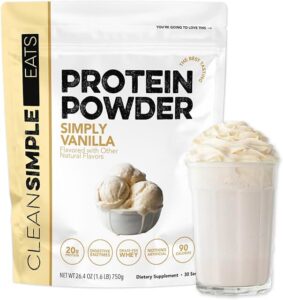
🛒 Shop Clean Simple Eats Whey Isolate on Amazon
🌿 Resistance Training: Why Protein Alone Is Not Enough
Even if you consume adequate protein, maintaining muscle strength also requires regular physical activity.
Resistance exercise places controlled demands on your muscles, encouraging them to adapt and become stronger.
According to the Centers for Disease Control and Prevention, older adults should include muscle-strengthening activities at least two days per week, alongside appropriate aerobic and balance activities.
Examples of Muscle-Strengthening Exercises
- Chair squats
- Resistance-band exercises
- Light dumbbell exercises
- Wall push-ups
- Modified bodyweight exercises
- Supervised strength-training programs
You do not necessarily need an expensive gym membership to begin strengthening your muscles.
I often emphasize the importance of selecting activities that match your physical abilities and gradually increasing difficulty as your strength improves.
If you have significant mobility limitations or medical conditions, a physical therapist or qualified exercise professional can help develop an appropriate program.
🌿 Lifestyle Habits That Support Healthy Muscles
Muscle preservation involves more than protein and exercise.
Balanced Nutrition
Your body requires adequate calories, vitamins, minerals, and other nutrients to maintain healthy tissues.
A balanced diet emphasizing vegetables, fruits, whole grains, healthy fats, and protein-rich foods supports overall wellness.
Adequate Sleep
Sleep supports normal recovery processes and physical performance.
According to the National Institute on Aging, healthy sleep habits are an important part of maintaining overall health as you age.
Regular Physical Activity
Walking, cycling, swimming, and other appropriate activities support cardiovascular fitness and endurance.
Combining these activities with resistance training provides broader benefits.
Hydration
Adequate hydration supports normal cellular function, circulation, and physical performance.
Avoid Smoking
Smoking can negatively affect cardiovascular and respiratory health, potentially limiting your ability to remain physically active.
🌿 Preventive Health Screening and Healthy Aging
When discussing healthy aging, I believe it is important to look beyond muscle strength alone.
Your cardiovascular and metabolic health can also influence mobility, physical endurance, and overall well-being.
Conditions such as diabetes, cardiovascular disease, and peripheral artery disease may affect physical function.
According to the American Heart Association, maintaining cardiovascular health through appropriate lifestyle practices and preventive healthcare can help reduce the risk of cardiovascular disease.
Routine medical visits provide opportunities to review blood pressure, cholesterol, glucose levels, physical function, and individualized screening needs.
🩺 Life Line Screening
Life Line Screening offers selected preventive cardiovascular and vascular screening services.
Depending on eligibility, location, and the screening package selected, available services may include:
- Carotid artery plaque assessments
- Peripheral artery disease screening
- Abdominal aortic aneurysm screening
- Atrial fibrillation screening
- Selected cardiovascular risk assessments
These services do not diagnose sarcopenia or directly measure muscle health.
I encourage readers to discuss their individual screening needs with a healthcare professional before purchasing a screening package.
According to the U.S. Preventive Services Task Force, certain screenings are recommended only for specific populations, while others, including routine carotid artery screening in asymptomatic adults, are not recommended.

🩺 Schedule Your Preventive Screening Today!
🌿 Prevention and Long-Term Muscle Health
Maintaining muscle strength after 50 requires a consistent, proactive approach.
Key Preventive Strategies
- Consume adequate high-quality protein
- Include protein-rich foods throughout the day
- Participate in regular resistance exercise
- Maintain a balanced diet
- Stay physically active
- Prioritize adequate sleep
- Maintain appropriate hydration
- Avoid smoking
- Discuss persistent weakness with your healthcare professional
- Participate in recommended preventive healthcare
I encourage you to focus on sustainable changes rather than attempting to transform your lifestyle overnight.
Even modest improvements in nutrition and physical activity can contribute to better long-term physical function.
🌿 AllHealthFit1™ Pro Tip
You are never too old to begin prioritizing muscle strength.
One practical strategy I recommend considering is including a meaningful source of protein with each main meal and combining adequate nutrition with resistance exercise appropriate for your abilities.
Remember, preserving muscle is not simply about looking stronger. It is about maintaining the strength, mobility, and independence that allow you to continue enjoying everyday life.
🌿 FAQ
1. Does everyone lose muscle after age 50?
Age-related muscle changes are common, but the rate varies. Regular resistance exercise and adequate nutrition may help preserve muscle strength.
2. How much protein should I consume daily?
Many healthy older adults may benefit from approximately 1.0–1.2 grams per kilogram of body weight daily, depending on individual needs.
3. Is whey protein beneficial after age 50?
Whey protein provides essential amino acids and may support muscle maintenance when combined with adequate nutrition and resistance exercise.
4. Can walking prevent muscle loss?
Walking supports cardiovascular health and mobility, but resistance exercise is particularly important for preserving muscle strength.
5. Can I rebuild muscle after age 60 or 70?
Yes. Many older adults can improve muscle strength and physical function through appropriately designed resistance training and sufficient nutrition.
🌿 Your Health Journey Continues—Explore More!
👉 How Diabetes Can Affect Eye Health: What Everyone Should Know
👉 The Connection Between Hydration and Urinary Tract Health: Simple Habits That May Help Prevent UTIs
🌿 Stay Connected With Our “Healthy You Insider” Newsletter
Receive weekly evidence-based insights on health & wellness, nutrition, fitness, and preventive health to support your journey to a healthier you.
Join “Healthy You Insider”
📚 References
- National Institute on Aging — Healthy Aging, Nutrition, and Exercise. https://www.nia.nih.gov/health
- National Institutes of Health, Office of Dietary Supplements — Exercise and Athletic Performance. https://ods.od.nih.gov/factsheets/ExerciseAndAthleticPerformance-HealthProfessional/
- Bauer J, et al. Evidence-Based Recommendations for Optimal Dietary Protein Intake in Older People: A Position Paper From the PROT-AGE Study Group. Journal of the American Medical Directors Association. 2013. https://doi.org/10.1016/j.jamda.2013.05.021
- Cruz-Jentoft AJ, et al. Sarcopenia: Revised European Consensus on Definition and Diagnosis. Age and Ageing. 2019. https://doi.org/10.1093/ageing/afy169
- Morton RW, et al. A Systematic Review, Meta-analysis and Meta-regression of the Effect of Protein Supplementation on Resistance Training-Induced Gains in Muscle Mass and Strength in Healthy Adults. British Journal of Sports Medicine. 2018. https://doi.org/10.1136/bjsports-2017-097608
- Centers for Disease Control and Prevention — Older Adult Physical Activity Guidelines. https://www.cdc.gov/physical-activity-basics/older-adults/
- U.S. Preventive Services Task Force — Carotid Artery Stenosis in Asymptomatic Adults: Screening. https://www.uspreventiveservicestaskforce.org/
🔗 Affiliate Disclosure
🛒 As an Amazon Associate, AllHealthFit1® earns from qualifying purchases. AllHealthFit1® also participates in other affiliate marketing programs with select health, wellness, and lifestyle partners. This article may contain affiliate links, and if you choose to make a purchase through these links, I may earn a small commission at no additional cost to you. Your support helps sustain the development of evidence-based health education and wellness resources through AllHealthFit1®.
⚕️ Medical Disclaimer:
Content on AllHealthFit1™ is provided for educational and informational purposes only and is not intended as medical advice. Always consult a qualified healthcare professional regarding medical concerns, symptoms, screening, laboratory testing, diagnosis, or treatment decisions.
🩺 In Health & Wellness,
Marjorie DiCarlo, M.D., Ph.D., M.P.H.
AllHealthFit1® ❤️🏃♀️🍃