
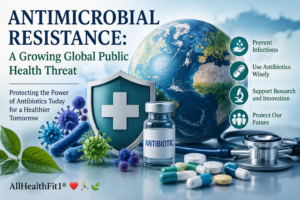
🌿 Antimicrobial Resistance: A Growing Global Public Health Threat 🌿
Antimicrobial resistance is making some infections increasingly difficult to treat and represents one of the most serious challenges facing modern medicine. Understanding why resistance develops, how it spreads, and how antimicrobial medications can be used responsibly may help preserve these lifesaving treatments for future generations.
By Marjorie DiCarlo, M.D., Ph.D., M.P.H.
🌿 Introduction
Antimicrobial resistance (AMR) is one of the most significant public health challenges facing the world today. According to the World Health Organization, bacterial antimicrobial resistance was associated with more than 4.7 million deaths worldwide in 2021. Global surveillance has also found that approximately 1 in 6 laboratory-confirmed bacterial infections worldwide was resistant to antibiotic treatment in 2023.
These numbers illustrate why antimicrobial resistance deserves attention far beyond hospitals and healthcare facilities.
Antimicrobial medications have transformed modern medicine. Antibiotics made many previously dangerous bacterial infections treatable and helped make surgery, cancer treatment, organ transplantation, intensive care, and other medical advances considerably safer.
However, microorganisms continuously adapt.
When antimicrobial medications are used, susceptible microorganisms may be eliminated while organisms capable of surviving treatment remain. These resistant organisms can multiply and spread, potentially making medications that previously worked less effective.
During my years working in healthcare and public health, I have seen how important appropriate medication use and infection prevention are to protecting both individual patients and communities. Antimicrobial resistance reminds us that the way medications are used today may influence whether they remain effective tomorrow.
Understanding AMR is therefore not simply an issue for healthcare professionals. It is an important public health concern that affects everyone.
🌿 Understanding Antimicrobial Resistance

Antimicrobials are medications used to prevent and treat infectious diseases.
They include:
- Antibiotics for bacterial infections
- Antivirals for certain viral infections
- Antifungals for fungal infections
- Antiparasitic medications for infections caused by parasites
Antimicrobial resistance occurs when microorganisms change in ways that allow them to survive medications that previously controlled or eliminated them.
An important distinction is that people do not become resistant to antibiotics—the microorganisms do.
For example, a bacterial infection that was once easily treated with a commonly prescribed antibiotic may eventually require a different medication because the bacteria have developed resistance.
In some cases, resistant infections may require stronger or alternative medications, intravenous therapy, hospitalization, or longer treatment.
When resistance becomes severe, treatment options may become extremely limited.
Antibiotic Resistance vs. Antimicrobial Resistance
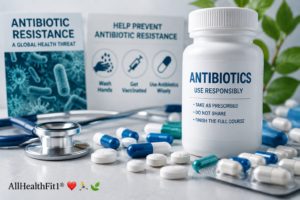 Although the terms are sometimes used interchangeably, they have different meanings.
Antibiotic resistance specifically refers to bacteria becoming resistant to antibiotics.
Antimicrobial resistance is a broader term describing resistance among bacteria, viruses, fungi, and parasites to medications designed to treat them.
Because antibiotics are widely used throughout healthcare, antibiotic resistance remains an especially important component of the global AMR problem.
🌿 Why Antimicrobial Resistance Is Increasing
Antimicrobial resistance can develop naturally as microorganisms evolve. However, inappropriate and excessive antimicrobial use can accelerate the development and spread of resistance.
Using Antibiotics When They Are Not Needed
Antibiotics treat certain bacterial infections.
They do not treat viral infections.
Antibiotics generally do not treat illnesses such as:
- Colds
- Influenza
- Most cases of acute bronchitis
- Most sore throats caused by viruses
- Many other viral respiratory infections
Taking antibiotics for a viral infection will not make the virus disappear faster. Instead, unnecessary antibiotic exposure may contribute to resistance while also exposing individuals to potential medication side effects.
Using Antibiotics Appropriately
When antibiotics are prescribed, they should be taken according to the healthcare professional’s instructions.
The Centers for Disease Control and Prevention recommends taking antibiotics exactly as prescribed and advises against sharing antibiotics, taking medication prescribed for another person, or saving antibiotics for future illnesses.
Choosing the correct antibiotic is also important. Different antibiotics target different types of bacteria, and some bacterial infections may require laboratory testing to determine which treatment is most appropriate.
This careful approach to antibiotic use is an important part of antibiotic stewardship.
The goal of stewardship is not to discourage medically necessary antibiotic treatment. Instead, it helps ensure that antibiotics are used appropriately and effectively while reducing unnecessary exposure.
Antimicrobial Use Beyond Human Medicine
Antimicrobial resistance also extends beyond doctors’ offices and hospitals.
Antimicrobial medications may be used in veterinary medicine and agriculture. Resistant microorganisms and resistance genes can move among humans, animals, food, healthcare settings, communities, and the environment.
Public health organizations increasingly use a One Health approach to antimicrobial resistance because human, animal, and environmental health are interconnected.
🌿 Why Resistant Infections Are a Serious Public Health Concern
Antimicrobial-resistant infections can affect anyone.
However, their consequences may be especially serious for older adults, young children, people with weakened immune systems, individuals with chronic medical conditions, and hospitalized patients.
When commonly used medications no longer work, healthcare professionals may need to use alternative treatments.
These treatments may:
- Be more expensive
- Produce additional side effects
- Require intravenous administration
- Require hospitalization
- Extend the duration of treatment
Antimicrobial resistance also threatens many medical procedures people now consider routine.
Modern healthcare frequently depends upon effective antimicrobial medications to prevent or treat infections associated with:
- Major surgery
- Joint replacement
- Organ transplantation
- Cancer chemotherapy
- Intensive care
- Treatment of serious injuries
If infections become increasingly difficult to treat, these medical interventions may carry greater risks.
Resistant Organisms Can Spread
Antimicrobial resistance does not remain confined to one hospital, city, or country.
People travel internationally. Food and goods cross borders. Animals and microorganisms also move between environments.
As a result, resistant organisms that emerge in one region may eventually appear elsewhere.
This is one reason antimicrobial resistance requires coordinated surveillance, responsible antimicrobial use, infection prevention, research, and international public health cooperation.
🌿 Preventing Infection and Using Antibiotics Responsibly
One of the most effective ways to reduce the need for antimicrobial treatment is to prevent infections whenever possible.
Individuals can contribute through several everyday practices.
Practice Good Hand Hygiene

Regular handwashing can help reduce the transmission of infectious organisms.
Hands should be washed with soap and water, particularly after using the restroom, before preparing or eating food, after coughing or sneezing, and after caring for someone who is ill.
Stay Current With Recommended Vaccinations
Vaccines can prevent certain infectious diseases and their complications.
Preventing infections can also reduce the number of situations in which antimicrobial treatment might otherwise become necessary.
Prepare Food Safely
Safe food handling may help reduce exposure to harmful microorganisms.
Important practices include:
- Washing hands before preparing food
- Preventing cross-contamination between raw and cooked foods
- Cooking foods to appropriate internal temperatures
- Refrigerating perishable foods promptly
🌿 Monitoring Fever During an Illness
Body temperature can provide useful information when someone becomes ill.
Fever is part of the body’s response to many infections and other illnesses. Monitoring temperature over time may help individuals recognize changes in symptoms and provide useful information when speaking with a healthcare professional.
Keeping a reliable digital thermometer in a household health kit can make temperature monitoring easier.
The Viproud Thermometer for Adults and Kids is a non-contact forehead thermometer designed to provide fast temperature readings within seconds. Its large LED display can make readings easier to see, including in dimly lit rooms, while color-coded temperature guidance provides a quick visual indication of different temperature ranges. Because it uses a non-contact design, it may also provide a convenient option for checking temperatures among multiple members of a household.
👉 Shop the Viproud Thermometer on Amazon
 A thermometer can be useful for monitoring symptoms, but a fever does not determine whether an infection is bacterial or viral, and fever alone does not indicate that antibiotics are necessary.
Persistent or very high fever, difficulty breathing, confusion, dehydration, severe pain, or rapidly worsening symptoms should be evaluated by a healthcare professional.
.
🌿 When Urinary Symptoms May Need Testing
Urinary tract infections are among the common bacterial infections for which antibiotics may be prescribed.
Typical symptoms may include:
- Burning or discomfort during urination
- Frequent urination
- Urinary urgency
- Lower abdominal discomfort
- Cloudy urine
However, urinary symptoms do not always mean that a bacterial urinary tract infection is present.
Determining whether bacteria are causing symptoms can be important because unnecessary antibiotic treatment contributes to antimicrobial resistance.
Depending on the clinical situation, healthcare professionals may use symptoms, medical history, urinalysis, urine cultures, or other testing to determine whether antibiotic treatment is appropriate.
MyUTI offers at-home urinary tract infection testing that may provide information about bacteria associated with urinary infections and help support informed discussions with a healthcare professional.
👉 Get Fast Online UTI Treatment

At-home testing should not replace medical care when significant symptoms are present.
Fever, chills, nausea or vomiting, back or flank pain, pregnancy, blood in the urine, significant weakness, or worsening urinary symptoms should prompt medical evaluation because these may indicate a more serious infection.
🌿 AllHealthFit1™ Pro Tip ❤️🏃♀️🍃
Antibiotics are powerful medications, but they are not appropriate for every infection.
If a healthcare professional determines that an illness is viral and antibiotics are unnecessary, avoiding unnecessary antibiotics helps protect both individual health and the long-term effectiveness of these medications.
When antibiotics are medically necessary, they can be lifesaving.
A simple principle to remember is:
Use the right antibiotic, for the right infection, at the right dose and duration, under appropriate medical guidance.
Preventing infections through good hand hygiene, vaccination, safe food preparation, and other healthy practices can also help reduce the need for antimicrobial treatment.
🌿 Frequently Asked Questions
1. What is antimicrobial resistance?
Antimicrobial resistance occurs when microorganisms such as bacteria, viruses, fungi, or parasites no longer respond effectively to medications designed to treat them.
2. Is antibiotic resistance the same as antimicrobial resistance?
Not exactly. Antibiotic resistance specifically involves bacteria becoming resistant to antibiotics. Antimicrobial resistance is broader and includes resistance involving bacteria, viruses, fungi, and parasites.
3. Can antibiotics treat a cold or the flu?
No. Colds and influenza are caused by viruses. Antibiotics work against certain bacterial infections and do not treat viral illnesses such as colds or influenza.
4. Can a person become resistant to antibiotics?
No. Microorganisms become resistant, not the person. Resistant microorganisms can then cause infections that are more difficult to treat.
5. What can individuals do to help reduce antimicrobial resistance?
Individuals can help by using antibiotics only when medically appropriate, taking prescribed medications according to instructions, practicing good hand hygiene, staying current with recommended vaccinations, preparing food safely, and taking steps to prevent infections.
📚 Continue Reading
👉 🌿 How Diabetes Can Affect Eye Health
Learn how diabetes may affect vision and why blood sugar management, preventive screening, and healthy lifestyle habits may help protect long-term eye health.
👉 🌿 Building a Cardiometabolic Foundation: A Doctor-Guided Strategy Framework
Explore practical strategies for supporting cardiovascular and metabolic health through prevention, screening, nutrition, physical activity, and informed healthcare decisions.
🌿 Stay Connected With Our “Healthy You Insider” Newsletter 🌿
Receive weekly health & wellness insights covering nutrition, fitness, preventive health, healthy aging, and important public health topics to support your journey toward a healthier you.
📚 References
- World Health Organization — Antimicrobial Resistance
https://www.who.int/news-room/fact-sheets/detail/antimicrobial-resistance - Centers for Disease Control and Prevention — About Antimicrobial Resistance
https://www.cdc.gov/antimicrobial-resistance/about/index.html - Centers for Disease Control and Prevention — Antibiotic Use and Antimicrobial Resistance
https://www.cdc.gov/antibiotic-use/about/index.html - World Health Organization — Global Antibiotic Resistance Surveillance Report 2025
https://www.who.int/publications/i/item/9789240116337
🌿 Affiliate Disclosure: This article may contain affiliate links from select partners, including Amazon and MyUTI. If you choose to make a purchase through these links, I may earn a small commission at no additional cost to you. Your support helps sustain the development of science-based health information through AllHealthFit1™.
⚠️ Medical Disclaimer: Content on AllHealthFit1™ is provided for educational and informational purposes only and is not intended as medical advice. Always consult a qualified healthcare professional regarding medical concerns, symptoms, testing, medications, or treatment decisions.
🩺 In Health & Wellness,
Marjorie DiCarlo, M.D., Ph.D., M.P.H.
AllHealthFit1® ❤️🏃♀️🍃